
Categories
Uncategorized

A Step-by-Step Guide on How to Pray Janaza

Janaza (funeral) prayer is one of the most important duties a Muslim community fulfills for a fellow believer who has passed away. Unlike the five daily prayers, Janaza has no bowing (ruku) or prostration (sujood). It consists of four takbeers, along with silent and recited supplications, and worshippers perform it standing. It is a collective duty (fard kifayah). This means enough community members must perform it, but once they do, the obligation no longer falls on everyone else. Still, it carries immense spiritual weight and reward for those who take part. A strong grasp of prayers like this one often starts with a solid foundation in the Quran itself. That’s why so many families choose to Learn Quran online with qualified teachers who guide them through every stage of their journey.

Many Muslims find the steps of Janaza prayer unfamiliar, especially converts or those raised outside a strong religious environment. In the moment, this can feel intimidating. This guide breaks the prayer down clearly, step by step, so you can perform it with confidence and understanding.

What Is Janaza Prayer?

Janaza is a special prayer for a deceased Muslim before burial. The community prays it in congregation, typically led by an imam. Worshippers place the deceased’s body in front of the row, with the imam standing level with the chest of the deceased. The prayer asks Allah for forgiveness and mercy on behalf of the person who has passed. It serves as a final communal act of compassion before burial.

Conditions Before the Prayer

Before Janaza prayer begins, worshippers should meet a few conditions:

  • Purification (Wudu): Just like other prayers, those praying Janaza must be in a state of ritual purity.
  • Facing the Qibla: Worshippers stand facing the Qibla, with the body placed perpendicular in front of them.
  • Proper covering (Ghusl and Kafan): Before the prayer, family or community members ritually wash (ghusl) and shroud (kafan) the deceased according to Islamic guidelines.
  • Rows (Saff): Worshippers typically form at least three rows behind the imam, following the practice recommended in several hadith.

Step-by-Step: How to Pray Janaza

1. Make the Intention (Niyyah)

Silently intend in your heart that you are praying Janaza for the deceased. There is no specific verbal formula required. The intention is simply a matter of the heart.

2. First Takbeer – Raise Hands and Recite Al-Fatiha

Say “Allahu Akbar” while raising your hands to your ears, just as you would at the start of a regular prayer. Then fold your hands over your chest. After this first takbeer, recite Surah Al-Fatiha silently.

3. Second Takbeer – Send Blessings on the Prophet ﷺ

Say “Allahu Akbar” again, this time without raising your hands. After this takbeer, recite Durood Ibrahim, the same blessings you send upon the Prophet ﷺ during the final sitting of regular prayer:

“Allahumma salli ‘ala Muhammadin wa ‘ala aali Muhammad, kama sallayta ‘ala Ibrahima wa ‘ala aali Ibrahim…”

4. Third Takbeer – Supplicate for the Deceased

Say “Allahu Akbar” a third time. This takbeer forms the heart of the Janaza prayer: a supplication (dua) specifically asking forgiveness and mercy for the deceased. A commonly recited dua is:

“Allahumma-ghfir li hayyina wa mayyitina, wa shahidina wa gha’ibina, wa sagheerina wa kabeerina, wa dhakarina wa unthana…”

(“O Allah, forgive our living and our dead, those present and those absent, our young and our old, our males and our females…”)

If the deceased is a child, worshippers recite a different supplication, asking Allah to make the child a means of intercession and reward for the parents.

5. Fourth Takbeer – Final Dua and Salam

Say “Allahu Akbar” a fourth time. A short pause follows. Some scholars recommend adding a brief dua here. To conclude the prayer, turn your head to the right, then to the left, saying “Assalamu alaikum wa rahmatullah” each time, just as you would in the regular five daily prayers.

Key Differences From Regular Prayer

  • No ruku (bowing) or sujood (prostration)
  • Worshippers pray it entirely standing
  • Four takbeers replace the usual prayer structure
  • Worshippers recite silently after the first three takbeers
  • It is a communal, one-time prayer, not repeated for the same person

Why Understanding This Prayer Matters

Janaza prayer highlights how much correct pronunciation (tajweed) and confident Quranic recitation matter, since worshippers recite parts of it from memory under emotionally heavy circumstances. This is one of many reasons why building a strong, lifelong connection with the Quran, through reading, memorization, and correct recitation, holds such value.

If you or your family want to strengthen this connection, Quran Institute Online Canada offers structured, teacher-led classes for every level and age group:

  • New to Arabic script? Start with the Noorani Qaida course to build a solid foundation and learn Noorani Qaida the right way.
  • Want to read Quran online fluently and correctly? The Quran Reading Course covers exactly that.
  • Looking to memorize Quran online? Our Quran Memorization Course pairs you with a dedicated teacher and a proven memorization plan.
  • Want to understand the meaning behind what you recite? The Quran Translation Course makes the Quran’s message accessible in your own language.

Our online Quran teachers bring experience, patience, and strong qualifications to every class, whether you’re a complete beginner or refining your Tajweed. As a trusted online Quran Academy and one of the leading platforms to learn Quran online in Canada, we tailor every class to the student’s pace and goals.

Final Thoughts

Janaza prayer expresses the Muslim community’s unity and compassion in a solemn but beautiful way. It stands as a final act of collective dua for someone who has passed on. Knowing the steps well lets you participate with sincerity and focus, rather than uncertainty, during a moment that calls for calm and presence.

If this guide helped clarify the prayer for you, consider deepening your broader Quranic knowledge. Explore our online Quran lessons and find the course that fits your journey, because understanding the Quran shapes how we understand every prayer, including this one.

For further reading on correct recitation, see our article on the significance of Tajweed guidelines. Contact us for trail classes.

Categories
Uncategorized

The Benefits of Reciting Ayatul Kursi

AAyatul Kursi is the 255th verse of Surah Al-Baqarah. It is one of the most powerful and frequently recited verses in the Quran. Known as the “Verse of the Throne,” it describes the majesty, power, and eternal sovereignty of Allah (SWT). Muslims around the world recite it daily. They do this for protection, spiritual strength, and a deeper connection with their Creator.

If you’re on a journey to learn Quran online, understanding the meaning behind powerful verses like Ayatul Kursi is a great place to start.

What Is Ayatul Kursi?

Ayatul Kursi is a single verse within Surah Al-Baqarah. It speaks about the oneness of Allah, His infinite knowledge, and His authority over the heavens and the earth. Despite being just one verse, scholars regard it as one of the greatest verses in the Quran. This is due to the depth of its meaning and the many hadith that highlight its virtues.

Many Muslims memorize this verse early in their Quranic journey. This is often part of a broader effort to learn Quran online with a qualified teacher. A good teacher can explain its meaning, context, and correct pronunciation.

The Meaning Behind Ayatul Kursi

Many Muslims memorize Ayatul Kursi at a young age. Fewer take the time to reflect on what each phrase actually means. The verse begins by affirming that Allah is the only true God. He is eternally living and self-sustaining, needing nothing from His creation. It goes on to describe how nothing escapes His knowledge. His “Kursi” (often translated as His Throne or dominion) extends over the heavens and the earth. Preserving all of creation causes Him no fatigue.

This is why scholars often describe Ayatul Kursi as a summary of Islam’s core beliefs in a single verse. It touches on Allah’s oneness, knowledge, power, eternal nature, and authority. These concepts form the foundation of a Muslim’s relationship with their Creator. Taking the time to study a proper translation, rather than reciting the Arabic alone, allows the verse to have a much deeper impact on the heart.

Spiritual Benefits of Reciting Ayatul Kursi

1. Protection from Harm

One of the most well-known benefits of Ayatul Kursi is protection. It is widely recited before sleeping, after the five daily prayers, and when leaving the house. The intention is to seek Allah’s protection from harm, evil, and negative influences.

2. A Source of Peace and Tranquility

Reciting Ayatul Kursi regularly can bring a sense of calm and reassurance. This is especially true during times of anxiety or uncertainty. Its powerful words remind the reciter of Allah’s constant watchfulness and care over His creation.

3. Strengthening Faith (Iman)

The verse is a concentrated reminder of Allah’s attributes: His knowledge, power, and eternal nature. Reflecting on its meaning helps strengthen one’s faith. It also deepens understanding of Tawheed, the oneness of Allah.

4. Immense Reward

Numerous hadith highlight the great reward tied to reciting Ayatul Kursi, particularly after obligatory prayers. Consistent recitation is a means of drawing closer to Allah. It is also a way of earning His pleasure.

5. A Means of Seeking Allah’s Mercy

Like much of the Quran, Ayatul Kursi is more than protective. It is also a source of mercy for those who recite it with sincerity, reflection, and understanding.

When Should You Recite Ayatul Kursi?

Ayatul Kursi can be recited at any time. However, certain occasions are especially recommended:

  • After each of the five daily prayers — a practice known to bring immense reward.
  • Before going to sleep — recited to seek Allah’s protection throughout the night.
  • When leaving the house — as protection while traveling or running daily errands.
  • During times of difficulty or anxiety — as a reminder of Allah’s power and control over all affairs.

Make Ayatul Kursi a consistent part of your daily routine. This is what allows its benefits to be fully felt over time.

How to Get the Most Out of Reciting Ayatul Kursi

To truly benefit from Ayatul Kursi, go beyond memorization. Focus on these three things:

  • Correct pronunciation (Tajweed): Reciting with proper Tajweed ensures the words are pronounced as revealed. Explore the significance of Tajweed guidelines to understand why this matters.
  • Understanding the meaning: Knowing the translation and context of the verse deepens its spiritual impact.
  • Consistency: Regular recitation, especially after prayers and before sleeping, builds a lasting habit rooted in faith.

Learning Ayatul Kursi and the Quran the Right Way

Structured learning makes all the difference, whether you’re a beginner or already advanced. At Quran Institute Online Canada, we offer:

We are a trusted Online Quran Academy. Our goal is to help Muslims across Canada and around the world connect with the Quran in a meaningful way. Our dedicated online Quran teachers genuinely care about your progress.

Start Your Quran Learning Journey Today

Ayatul Kursi is a beautiful reminder of Allah’s greatness. Reciting it with understanding and correct Tajweed multiplies its benefits. Are you ready to deepen your knowledge of the Quran? Whether through memorization, reading, Tajweed, or translation, Quran Institute Online Canada is here to guide you every step of the way.

Contact Us

Have questions, or want to book a free trial class? Contact us today. Let our team help you find the right course for you or your child.

Categories
Uncategorized

Why Children Should Learn To Read The Quran At A Young Age

Childhood shapes a person’s character, habits, and beliefs. The years between ages four and twelve are when a child’s mind is most receptive. They absorb language, values, and routines that often stay with them for life. This is why so many Muslim parents start their children’s religious education early. It’s especially true when it comes to the Holy Quran. Introducing children to the Quran young nurtures their spiritual growth. It also builds discipline, moral character, and a lifelong connection with their faith.

At Quran Institute Online Canada, we work with families across Canada. We help children begin their Quranic journey in a way that’s engaging and age-appropriate. In this article, we’ll explore why early Quran education matters. We’ll also look at how parents can get started.

1. A Child’s Mind Absorbs Faster

Young children have a remarkable ability to memorize and retain information. Their brains are still developing the neural pathways that shape long-term learning. This makes early childhood the ideal time to introduce the Quran’s Arabic script, sounds, and verses. Children who begin early often find it far easier to memorize Quran online than those who start as teenagers or adults. Memorization becomes second nature when practiced consistently from a young age.

This is one reason structured Online Quran Classes focus heavily on repetition and rhythm. They use gentle memorization techniques designed specifically for younger learners.

2. Building a Strong Foundation with Noorani Qaida

Before a child can read the Quran fluently, they need the basics. This means learning Arabic letters, pronunciation, and how to join letters into words. This is where Learn Noorani Qaida comes in. Noorani Qaida acts as the stepping stone to Quranic literacy. It teaches children correct pronunciation and prepares them for Tajweed rules later on.

Our Noorani Qaida Course is designed for beginners. It uses simple, child-friendly methods that make learning Arabic letters enjoyable rather than overwhelming.

3. Correct Pronunciation Through Tajweed

One of the biggest advantages of starting young is natural pronunciation. Children pick it up naturally, much like they learn their native language. Tajweed is the set of rules governing proper pronunciation of Quranic Arabic. It’s far easier to instill in a child than to correct in an adult who has already developed habits.

Teaching Tajweed early helps children recite the Quran the way it was revealed. This includes proper articulation points (makharij) and rules of elongation, pausing, and merging. You can learn more in our article on the significance of Tajweed guidelines.

4. Instilling Discipline and Routine

Regular Quran lessons teach children more than religious knowledge. They also teach discipline, consistency, and time management. A child who commits to daily or weekly lessons learns the value of routine. These habits carry over into schoolwork and daily life.

Enrolling in structured Online Quran lessons gives children a consistent schedule to follow. A qualified teacher guides their progress every step of the way.

5. Access to Qualified Teachers from Home

Modern Quran education makes it easy to learn Quran online with qualified instructors. Your child never has to leave home. Busy family schedules, harsh Canadian winters, and long commutes no longer stand in the way of quality religious education.

Our online Quran teachers are trained in Quranic recitation and Tajweed. They also know how to teach young children patiently, using age-appropriate methods that keep them engaged.

6. Understanding the Meaning, Not Just the Recitation

Learning to recite is important, but understanding the Quran’s message matters too. As children grow older, many parents enroll them in a Quran Translation Course. This helps them connect with the deeper meaning behind what they recite. It strengthens both their faith and their moral compass.

7. Setting the Stage for Hifz (Memorization)

Many families in Canada want their children to become Hafiz-e-Quran. This means memorizing the entire Quran by heart. Starting early makes this goal far more achievable. Young children have more time, mental flexibility, and fewer academic pressures than older students. Our Quran Memorization Course guides children through this process step by step, at a pace that suits their ability.

Getting Started with Online Quran Education in Canada

Choosing the right platform matters. As a trusted Online Quran Academy, Quran Institute Online Canada offers a full range of programs for children, including:

As a leading online Quran institute in Canada, we understand the needs of Canadian Muslim families. We design our classes around your child’s schedule, pace, and comfort level.

Final Thoughts

Teaching children to read the Quran young lays a strong foundation. It shapes their character, discipline, and spiritual identity for life. With guidance, patience, and consistency, your child can develop a lifelong love for the Quran. This connection can stay with them well into adulthood.

If you’re ready to begin this journey, visit Quran Institute Online Canada today. Explore our range of courses designed specifically for young learners.

Categories
Uncategorized

Teaching Arabic to children

Arabic is more than just a language for Muslim families around the world — it is the language of the Quran, the language of daily prayers, and a key that unlocks a deeper connection with faith. For many parents, especially those living outside Arabic-speaking countries, teaching Arabic to children can feel like a daunting task. The good news is that with the right approach, resources, and consistency, children can learn Arabic at home or through structured online programs with confidence and joy.

In this article, we’ll explore why Arabic matters for young Muslims, the best age to start, practical teaching methods, and how online learning platforms make the process easier for busy families in Canada and beyond.

Why Teach Arabic to Children Early?

Children are naturally wired to absorb new languages faster than adults. Their brains are still developing the neural pathways needed for language acquisition, which is why early exposure to Arabic — even in small doses — can make a lasting difference.

Beyond the cognitive benefits, learning Arabic helps children:

  • Understand the meaning behind the words they recite in Salah
  • Build a stronger, more personal relationship with the Quran
  • Develop pride and confidence in their religious and cultural identity
  • Prepare for future study of Tajweed, Quran memorization, and Islamic studies

Introducing Arabic early doesn’t mean children need to become fluent speakers overnight. Rather, it lays a foundation they can build on for the rest of their lives.

What Age Should Children Start Learning Arabic?

Most scholars and educators agree that children can begin learning Arabic letters and basic sounds as early as age 4 or 5. At this stage, the focus should be on:

  • Recognizing the Arabic alphabet
  • Understanding basic pronunciation
  • Associating sounds with letters through games and repetition

By age 6 or 7, many children are ready to move on to structured programs like Learn Noorani Qaida, which teaches the foundational rules of Arabic pronunciation and prepares them to read the Quran fluently. This step is often considered the single most important building block before a child begins to read Quran online with proper articulation.

Practical Tips for Teaching Arabic at Home

Not every family has access to a native Arabic speaker at home, but that doesn’t mean progress isn’t possible. Here are some practical strategies parents can use:

1. Make it Playful, Not a Chore

Young children respond best to games, songs, and colorful flashcards rather than rigid lessons. Turning letter recognition into a game keeps children engaged and reduces resistance.

2. Practice Consistency Over Intensity

Fifteen minutes of daily practice is far more effective than a two-hour session once a week. Short, regular sessions help information stick in long-term memory.

3. Connect Arabic to the Quran Early

Rather than teaching Arabic as an abstract subject, tie it directly to Quranic verses your child already hears in daily prayers. This gives the learning immediate relevance and meaning.

4. Use Qualified Teachers

Correct pronunciation matters — especially for letters that don’t exist in English. Working with experienced online Quran teachers ensures children learn correct sounds from the start, rather than picking up habits that are hard to unlearn later.

5. Introduce Tajweed Gradually

Once a child is comfortable reading Arabic script, introducing basic Tajweed rules helps them recite the Quran the way it was revealed — with proper pronunciation, pacing, and articulation points.

Why Online Quran Classes Work So Well for Children

For families in Canada and across North America, finding a qualified Arabic or Quran teacher locally isn’t always easy. This is where Online Quran Classes have become a game-changer for busy households.

Here’s why more parents are turning to virtual learning:

  • Flexibility: Classes can be scheduled around school, sports, and family commitments.
  • One-on-one attention: Unlike crowded weekend classes, online sessions often mean a child gets undivided attention from their teacher.
  • Access to qualified teachers: Families are no longer limited to whoever is available in their local community — they can connect with skilled instructors from anywhere.
  • Comfort of home: Children often feel more relaxed and open to learning in a familiar environment.

A well-structured Online Quran Academy will typically guide a child through a clear progression: starting with Noorani Qaida, moving into confident Quran reading, and eventually advancing toward Quran memorization online for those who wish to become Huffaz.

Building a Long-Term Learning Path

Teaching Arabic to children isn’t a one-time lesson — it’s a journey. A typical learning path often looks like this:

  1. Foundational Stage – Learning the Arabic alphabet and basic sounds through Noorani Qaida
  2. Reading Stage – Building fluency to confidently learn Quran online with correct pronunciation
  3. Refinement Stage – Applying Tajweed rules for accurate, beautiful recitation
  4. Memorization Stage – For families who wish to pursue it, moving into structured Hifz classes to memorize Quran online

Following a clear, step-by-step path prevents children from feeling overwhelmed and gives parents a way to track meaningful progress over time.

Final Thoughts

Teaching Arabic to children is one of the most valuable investments a parent can make — not just academically, but spiritually. It opens the door to a lifelong relationship with the Quran and strengthens a child’s sense of identity and faith.

Whether you’re just starting with the alphabet or looking for structured Online Quran lessons tailored to your child’s pace, working with a trusted Online Quran Institute in Canada can make the entire journey smoother, more consistent, and far more enjoyable for both you and your child.

If you’re ready to begin, explore our range of courses — from Noorani Qaida to Tajweed and Quran memorization — and give your child the gift of a lifelong connection with the Quran. Contact us for trial classes.

Categories
Uncategorized

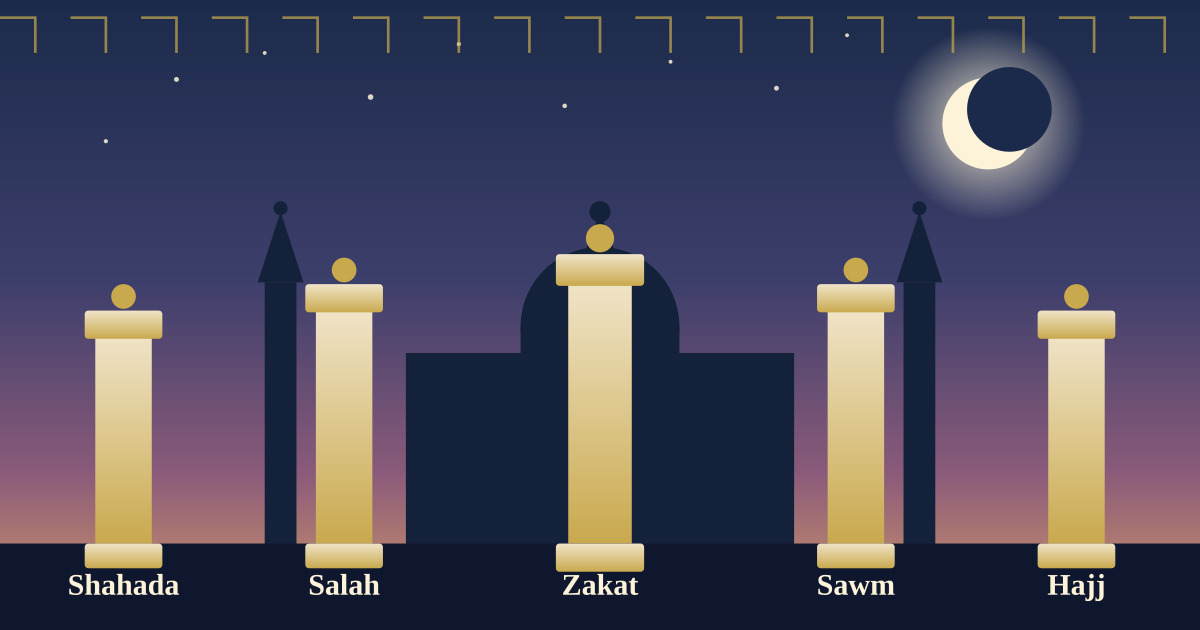
The Five Pillars of Islam: Understanding the Core Beliefs of Islam

Islam rests on five essential acts of worship. We call them the Five Pillars. Together, they shape a Muslim’s daily life, spiritual growth, and relationship with Allah (SWT). Maybe you’re new to the faith. Maybe you’re a parent guiding your children. Or maybe you simply want to deepen your understanding. Either way, learning about these pillars is your first step toward a stronger, more meaningful practice of Islam.

At Quran Institute Online Canada, we believe true understanding of the Five Pillars starts with the Quran itself. The Quran’s teachings root every pillar. And the more fluently you can read, recite, and understand the Quran, the more meaning these acts of worship hold for you. That’s why so many students choose structured online Quran classes to build a strong foundation, whether before or alongside learning about the pillars of faith.

Let’s explore each pillar and see how it connects to a life centered on the Quran.

1. Shahada — The Declaration of Faith

The Shahada is the testimony of faith: “There is no god but Allah, and Muhammad is His Messenger.” This declaration opens the gateway into Islam. Every other pillar rests on it. It isn’t just a phrase to memorize — you need to understand and internalize the truth behind it.

To grasp the depth of the Shahada, you need knowledge of the Quran’s message about Tawheed, the Oneness of Allah. That’s why so many new Muslims and lifelong learners choose to learn Quran online with qualified teachers. A good teacher explains the meaning behind the words, not just the pronunciation.

2. Salah — The Five Daily Prayers

Salah is the ritual prayer you perform five times a day. It connects you directly to Allah. Each prayer includes recitation from the Quran, so correct reading and pronunciation matter deeply.

This is where Tajweed comes in — the set of rules that govern how you pronounce Quranic Arabic. Mispronouncing a verse can change its entire meaning. That’s why we strongly encourage students to study the significance of Tajweed guidelines as part of their learning journey. Our online Quran teachers guide students step by step, so they apply every letter and rule correctly during Salah.

If you’re just starting to read Arabic script, try our Noorani Qaida course first. It teaches the basics of Arabic letters, pronunciation, and Tajweed rules. This foundation helps you pray with confidence and understanding.

3. Zakat — Charity and Purification of Wealth

Zakat means giving a portion of your wealth to those in need. It purifies your wealth and reminds you of your responsibility toward the wider community. The Quran repeatedly emphasizes generosity, compassion, and social justice. When you understand these verses in their proper context, you appreciate why Zakat holds such a central place in the faith.

Our Quran translation course helps students go beyond recitation and grasp real meaning. You’ll explore the many verses related to charity, wealth, and justice, guided by an experienced teacher.

4. Sawm — Fasting During Ramadan

Fasting during Ramadan is one of the most spiritually rewarding pillars. It ties directly to the Quran, since Allah revealed the Quran during this month. Many Muslims aim to complete a full reading of the Quran during Ramadan. This makes it the ideal time to read Quran online with structured guidance.

Our Quran reading course helps students of every age and skill level build the fluency they need to read the Quran smoothly. Many students set this as their personal goal ahead of Ramadan.

5. Hajj — The Pilgrimage to Makkah

Hajj is the pilgrimage to Makkah. Every Muslim who is physically and financially able must complete it at least once in their lifetime. It’s a profound act of devotion, unity, and submission to Allah. The Quran describes the rituals of Hajj throughout its verses. Pilgrims who have studied the Quran closely often find their journey even more spiritually enriching, because they recognize the verses and stories tied to the sacred sites they visit.

If you want to build a lifelong, meaningful connection with the Quran — one that enhances every pillar of your faith — consider working toward memorization. Many students choose to memorize Quran online with our certified huffaz. Our Quran memorization course suits learners of every age and offers flexible scheduling with one-on-one attention.

Why the Quran Sits at the Heart of the Five Pillars

Each of the Five Pillars connects deeply to the Quran — its verses, its guidance, its spiritual instructions. Without a solid grasp of the Quran, you’ll find it hard to fully appreciate the wisdom behind Salah, Zakat, Sawm, and Hajj. That’s why building a strong relationship with the Quran isn’t just helpful. It’s essential.

Our online Quran academy offers a complete range of courses to meet you wherever you are in your journey:

  • Noorani Qaida for absolute beginners learning to read Arabic
  • Quran Reading for students building fluency and confidence
  • Quran Memorization (Hifz) for those pursuing the honor of becoming a Hafiz or Hafiza
  • Quran Translation for learners who want to understand the deeper meaning of the verses
  • Tajweed woven throughout every course, so you recite correctly and beautifully

Start Your Journey Today

Understanding the Five Pillars of Islam is a lifelong journey. It begins with a strong foundation in the Quran. As a trusted online Quran Institute in Canada, we proudly offer flexible, one-on-one online Quran lessons with experienced, qualified teachers. You can join us from anywhere in Canada or around the world.

Maybe you’re taking your first steps with Noorani Qaida. Maybe you’re working toward memorizing the entire Quran. Either way, our team supports you every step of the way.

Contact us today to book a free trial class and start building a stronger connection with the Quran, one lesson at a time.

Categories
Uncategorized

Parental Guidance: Teaching the Quran to Kids

Every parent wants their child to grow up with a strong connection to their faith, but knowing where to start can feel overwhelming. Teaching the Quran to kids is one of the most meaningful gifts you can give them, and it doesn’t have to happen only in a mosque or a classroom halfway across town. Thanks to technology, families everywhere can now learn Quran online from the comfort of home, at a pace that fits their child’s needs.

If you’re a parent trying to figure out the best approach, here’s a practical guide to help you support your child’s Quranic education.

Start With the Right Foundation

Before a child can read or memorize the Quran, they need to understand Arabic letters, sounds, and pronunciation. This is where Noorani Qaida comes in. It’s the traditional starting point for Quran education, teaching children how to recognize letters and combine them into words correctly.

Enrolling your child in a structured program to learn Noorani Qaida early on builds the confidence and skills they’ll need for everything that follows. Skipping this step often leads to mispronunciation habits that are harder to correct later, so it’s worth prioritizing from the very beginning.

Choose the Right Learning Format

Not every child learns the same way, and not every family has the same schedule. This is why online Quran classes have become so popular with parents across Canada and beyond. Instead of commuting to a physical center, your child can join online Quran lessons through a laptop or tablet, with a qualified teacher guiding them one-on-one or in a small group.

Look for an online Quran academy that offers:

  • Flexible scheduling around school and extracurricular activities
  • One-on-one sessions so your child gets individual attention
  • Female or male teacher options based on your preference
  • Trial classes so you can see if the teaching style is a good fit

Reading, Memorization, and Tajweed

Once your child has a solid grasp of the basics, the journey typically moves in a few directions, often overlapping:

Reading the Quran — Being able to read Quran online fluently is a milestone in itself. Regular practice with a patient teacher helps children build reading speed and accuracy over time.

Memorization (Hifz) — Many parents hope their children will memorize Quran online, whether that means a few short surahs or the entire Quran. This process takes consistency and encouragement, and having a dedicated teacher to track progress makes a real difference.

Tajweed — Correct pronunciation and recitation rules, known as Tajweed, are what give Quranic recitation its beauty and accuracy. Understanding the significance of Tajweed guidelines helps children recite with the correct rhythm, elongation, and articulation, which is something that’s difficult to self-teach without expert guidance.

Why Online Quran Teachers Make a Difference

One of the biggest advantages of online learning is access to qualified, experienced online Quran teachers, regardless of where you live. A well-established online Quran institute in Canada will typically vet its teachers for both their command of Tajweed and their ability to connect with young learners, since teaching children requires patience, warmth, and creativity that goes beyond simply knowing the material.

When researching a program, ask about:

  • The teacher’s qualifications and years of experience with children specifically
  • How progress is tracked and communicated to parents
  • What happens if your child needs a different teacher or pace
  • Whether classes include Quran translation and meaning, not just recitation

Practical Tips for Parents

Supporting your child’s Quran education isn’t only about enrolling them in classes — your involvement matters too:

  1. Create a consistent routine. Even 20–30 minutes a day at the same time builds habit and discipline.
  2. Stay present during early sessions. Sitting nearby (without hovering) shows your child this is important to you too.
  3. Celebrate small wins. Completing a surah or mastering a Tajweed rule deserves recognition.
  4. Be patient with mistakes. Learning Arabic pronunciation takes time, especially for non-native speakers.
  5. Communicate with the teacher. Regular check-ins help you understand your child’s strengths and areas to work on.

Final Thoughts

Teaching the Quran to kids is a journey, not a race. Whether your child is just starting with Noorani Qaida or is deep into memorization and Tajweed, the right support system makes all the difference. With flexible online Quran classes, dedicated teachers, and your steady encouragement at home, your child can build a lifelong, meaningful relationship with the Quran. Contact us to take the first step in your child’s Quranic education today.

Categories
Uncategorized

Here Are Some of the Amazing Benefits of Basic Quran Learning

The Quran is not just a religious text — it is a complete guide for life, offering wisdom, comfort, and direction to millions of Muslims around the world. For both children and adults, building a strong foundation in basic Quran learning opens the door to a lifetime of spiritual growth, discipline, and connection with Allah (SWT).

If you’re considering where to begin, an Online Quran Academy makes it easier than ever to start this journey from the comfort of your home. Below, we explore some of the most amazing benefits of learning the Quran from the basics, and why so many families in Canada and beyond are choosing to learn Quran online today.

1. A Strong Foundation Through Noorani Qaida

Every meaningful journey begins with the right first step, and in Quran education, that step is Noorani Qaida. This foundational course teaches Arabic letters, correct pronunciation, and basic reading rules before a student moves on to the Quran itself.

Students who learn Noorani Qaida properly develop confidence and accuracy that stays with them for life. Skipping this step often leads to mistakes in pronunciation later on, so starting with a solid base is one of the smartest decisions a new learner can make.

2. Improved Recitation Through Tajweed

Tajweed refers to the set of rules that govern how the Quran should be correctly pronounced and recited. Learning Tajweed isn’t just about following rules — it’s about honoring the words of Allah (SWT) with the respect and precision they deserve.

Through proper training in Tajweed, students learn the correct articulation points (makhraj) of Arabic letters, when to elongate sounds, and how to recite with the beautiful rhythm the Quran is known for. This not only improves recitation but also deepens a learner’s emotional and spiritual connection to the verses.

3. The Ability to Read the Quran with Confidence

One of the most rewarding milestones in a student’s journey is being able to independently read Quranic text. A structured Read Quran online course guides students step by step, from recognizing individual letters to reading complete verses fluently.

This skill builds lifelong independence — students no longer need to rely on others to recite for them. They can open the Quran at any time and connect with it directly.

4. The Immense Reward of Memorization

Memorizing the Quran, or even portions of it, is considered one of the most virtuous acts in Islam. It strengthens memory, builds discipline, and creates a permanent bond between the learner and the words of Allah (SWT).

With the right guidance, students can begin to memorize Quran online at a pace suited to their age and ability. Whether it’s a few short surahs or the entire Quran (Hifz), memorization offers benefits that extend far beyond religious practice — it sharpens focus, boosts self-esteem, and instills a sense of accomplishment.

5. Deeper Understanding Through Translation

Reciting and memorizing are powerful, but understanding the meaning behind the verses brings a whole new level of connection. Learning the translation and context of Quranic verses allows students to apply its teachings meaningfully in daily life — helping them make ethical decisions, build good character, and understand the wisdom behind Islamic guidance.

6. Learning from Qualified, Caring Instructors

The quality of a student’s learning experience often comes down to the quality of their teacher. Experienced online Quran teachers understand how to adapt their teaching style to different ages, personalities, and learning speeds — making the process enjoyable rather than stressful.

Good instructors don’t just teach recitation; they nurture a genuine love for the Quran, encouraging consistency and patience along the way.

7. Flexibility and Accessibility with Online Quran Classes

Gone are the days when Quran education required a physical mosque or madrassa nearby. With Online Quran Classes, students of all ages can learn from anywhere — whether at home, while traveling, or balancing a busy school and work schedule.

This flexibility has made quality Online Quran lessons accessible to families across Canada and around the world, removing barriers like distance, transportation, and rigid scheduling.

8. A Trusted Online Quran Institute in Canada

For Muslim families living in Canada, finding a reliable, structured, and culturally sensitive place to learn can be a challenge. A dedicated Online Quran Institute in Canada bridges that gap — offering a curriculum designed with both authenticity and the needs of Canadian families in mind, including flexible time zones and ongoing support for parents.

Final Thoughts

Basic Quran learning is truly the gateway to a lifetime of spiritual growth. From mastering Noorani Qaida and Tajweed to confidently reading, understanding, and eventually memorizing the Quran, every step brings immense personal and religious reward.

If you’re ready to begin this journey — for yourself or your children — an experienced Online Quran Academy can guide you every step of the way with structured lessons, qualified teachers, and the flexibility modern life demands. Contact us for free trail classes.

Categories
Uncategorized

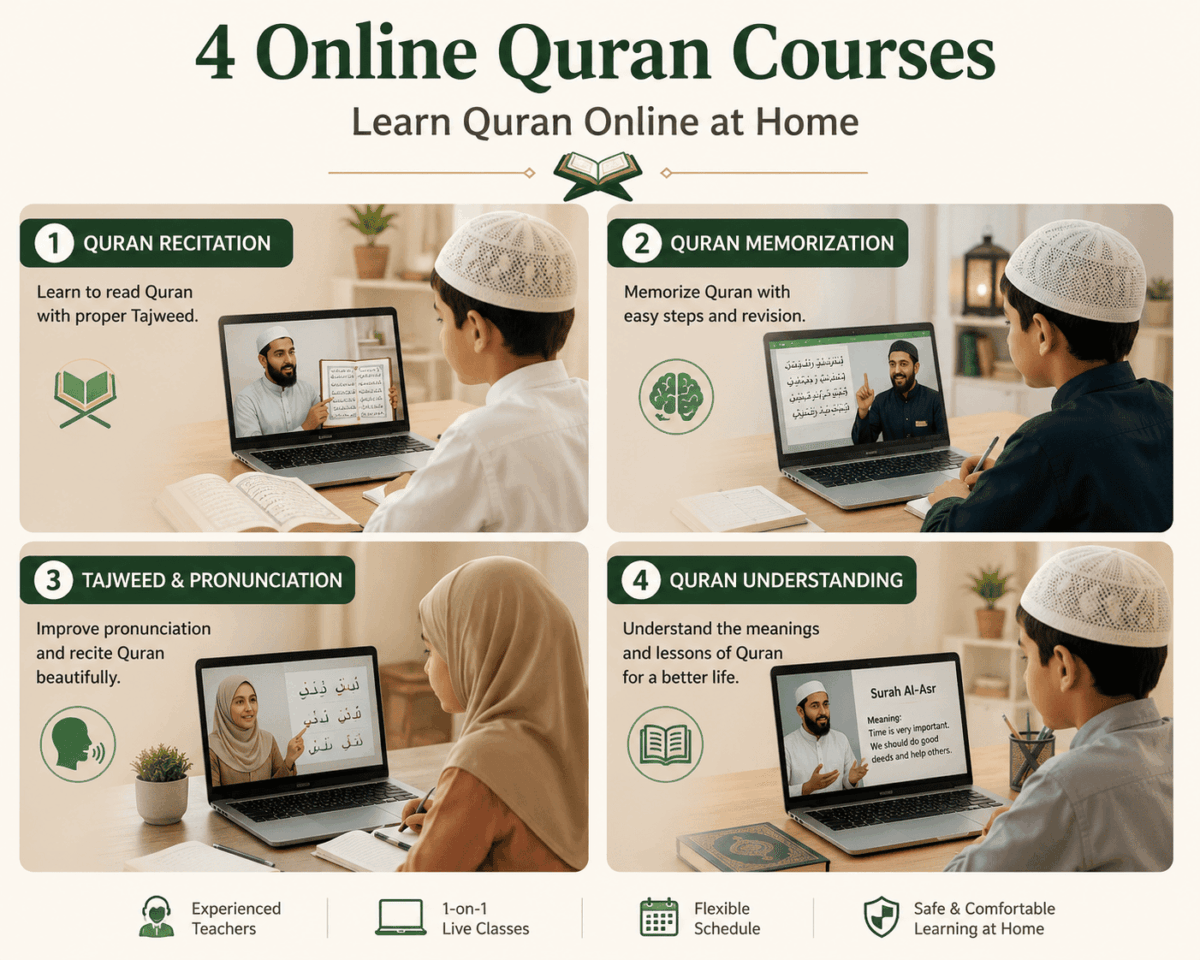
4 Online Quran Courses You Need to Know About

Learning the Quran no longer requires a trip to the masjid or a local madrasah. With the rise of online education, Muslim families across Canada and around the world can now access qualified instructors, structured curriculums, and flexible schedules from the comfort of home. Whether you are a beginner or looking to deepen your recitation skills, choosing the right course matters. A trusted Online Quran Institute in Canada offers four essential courses below to help you or your child learn Quran online with confidence.

1. Noorani Qaida Course

Every Quran learning journey begins with the basics, and that is exactly what the Noorani Qaida course is designed for. This foundational program teaches Arabic letters, their correct pronunciation (makhraj), and how letters connect to form words. It is the essential first step for children and adult beginners alike before moving on to Quran reading.

Students who learn Noorani Qaida with a dedicated online tutor build a strong pronunciation base, which makes every later stage of Quran learning easier and more accurate.

  • Ideal for absolute beginners, including young children
  • Focuses on correct pronunciation and letter recognition
  • Prepares students for fluent Quran reading

2. Quran Reading Course

Once the basics are in place, students move on to reading the Quran directly. This course helps students read Quran online fluently, word by word, with the guidance of experienced online Quran teachers. Lessons are typically one-on-one, so tutors can adjust the pace to match each student’s comfort level.

Adults who want to reconnect with the Quran especially favor this course, and many parents enroll their children in structured, weekly online Quran lessons for the same reason.

  • One-on-one sessions tailored to the student’s pace
  • Builds fluency and confidence in reading Arabic script
  • Suitable for children, teens, and adult learners

3. Quran Memorization (Hifz) Course

For students aiming to become a Hafiz or Hafiza, the Hifz course offers a structured path to memorize the Quran online under the supervision of qualified scholars. It uses proven memorization techniques, regular revision (dohrani) schedules, and progress tracking to ensure long-term retention.

Many families choose a trusted online Quran academy for Hifz specifically because it allows for consistent, distraction-free one-on-one sessions, something that is harder to arrange in a crowded physical classroom.

  • Personalized memorization plans with regular revision
  • Progress tracking to keep students motivated
  • Flexible scheduling around school and work commitments

4. Tajweed Course

Reading the Quran correctly is not just about pronunciation, it is about applying the proper rules of recitation. The Tajweed course teaches students the rules that govern how to recite each letter and word correctly, including elongation, nasalization, and stopping rules. Anyone who wants to recite the Quran the way Allah revealed it needs this course.

A strong grasp of Tajweed also complements the other three courses above, whether a student is still working through Noorani Qaida or has already completed Hifz.

  • Covers the core rules of Quranic recitation
  • Improves accuracy and beauty of recitation
  • Recommended for students at every learning stage

Why Learn With an Online Quran Institute in Canada?

Choosing a Canada-based online Quran academy means the academy schedules classes around Canadian time zones, teachers understand the needs of Muslim families living in the West, and support stays only a message away. With certified online Quran teachers and a curriculum covering Noorani Qaida, Quran reading, memorization, and Tajweed, students get a complete and reliable path to learning the Quran online.

Get Started Today

Whether you are looking for online Quran classes for your child or want to begin your own journey to memorize and recite the Quran correctly, the right course makes all the difference. Explore our full range of programs and book a free trial class to find the course that fits your goals.

Ready to begin? Book your free trial class here and take the first step toward learning the Quran online with expert guidance.

Categories
Uncategorized

Tips to Improve Fluency in Reading the Quran

Reading the Quran fluently is a goal that many Muslims strive for throughout their lives. Whether you’re a beginner just starting to recognize Arabic letters or someone who has been reciting for years but wants to smooth out hesitations and mistakes, fluency doesn’t happen overnight. It’s built through consistent practice, the right guidance, and a genuine love for the words of Allah (SWT).

At Quran Institute Online Canada, we’ve worked with students of all ages and skill levels, and we’ve seen firsthand what separates those who struggle for years from those who make steady, visible progress. In this post, we’ll walk through practical, proven tips to help you — or your child — read the Quran with greater ease, confidence, and correctness.

Why Fluency Matters

Fluency isn’t just about reading fast. It’s about reading correctly, smoothly, and with understanding of the flow of the text. A fluent reader:

  • Recognizes letters and their forms instantly, without sounding them out
  • Applies the rules of Tajweed naturally, without constantly pausing to think
  • Reads with appropriate rhythm and pacing, rather than word-by-word
  • Can focus on meaning and reflection, rather than just decoding

Fluency is the bridge between simply “reading” the Quran and truly connecting with it. That’s why it’s such an important milestone for every learner, and why so many students search for ways to learn Quran online with structured, guided support.

1. Start with a Strong Foundation: Noorani Qaida

Before you can run, you need to walk — and in Quran reading, that walk is Noorani Qaida. This foundational book teaches the shapes of Arabic letters, their sounds in isolation and in combination, and the basic rules that govern pronunciation.

Many learners try to skip this step and jump straight into reading the Quran, only to develop bad habits that are hard to unlearn later. If you’re serious about becoming a fluent reader, we strongly recommend you learn Noorani Qaida properly first, ideally under the guidance of a qualified teacher who can correct your pronunciation from the very beginning.

2. Learn and Apply the Rules of Tajweed

Tajweed refers to the set of rules that govern how the Quran should be pronounced — where to elongate a letter, where to stop, how to pronounce letters that sound similar but are articulated differently, and much more. Reading without Tajweed might get you through the words, but it won’t give you the fluency or the correctness that proper recitation requires.

A few ways to build your Tajweed knowledge:

  • Study the rules systematically, one at a time, rather than trying to absorb everything at once
  • Practice each rule in isolation before applying it within full verses
  • Listen closely to qualified reciters and try to mimic their pronunciation
  • Ask a teacher to listen to your recitation regularly and point out mistakes

Tajweed and fluency go hand in hand. As your Tajweed improves, your reading naturally becomes smoother, because you’re no longer second-guessing how to pronounce each letter.

3. Practice Consistently — Even If It’s Just 10 Minutes a Day

Fluency is a skill, and like any skill, it improves through repetition. It’s far more effective to read for 10–15 minutes every single day than to read for two hours once a week.

Try to:

  • Set a fixed time each day for your Quran reading practice
  • Reread the same passage multiple times until it feels smooth
  • Track your progress by noting which surahs or pages you’ve mastered
  • Avoid long gaps between practice sessions, as they can cause you to lose momentum

Small, consistent effort compounds over time. Many of our students who learn Quran online with us see noticeable improvement within just a few weeks of daily practice.

4. Read Aloud, Not Silently

Silent reading might feel comfortable, but it does very little to build reading fluency. Reading aloud forces you to actually produce the sounds, engage your tongue and mouth muscles correctly, and notice mistakes you might otherwise overlook.

If possible, record yourself reading a passage and listen back. You’ll often catch errors in pronunciation, pacing, or Tajweed application that you didn’t notice while reading. This kind of self-review is a powerful (and free) tool for improvement.

5. Get Feedback from a Qualified Teacher

Self-study has its place, but nothing replaces the value of a teacher who can listen to you recite and correct you in real time. Mistakes in Quran reading are often subtle — a slightly wrong pronunciation of a letter, an incorrect elongation, a missed pause — and these are very hard to catch on your own.

This is exactly why so many students turn to online Quran classes rather than trying to learn entirely by themselves. A good teacher will:

  • Listen to your recitation one-on-one or in small groups
  • Correct mistakes immediately, before they become habits
  • Give you tailored practice based on your specific weak points
  • Encourage and motivate you to keep progressing

At our online Quran Academy, our online Quran teachers are trained to work with students of every level, from complete beginners to those refining advanced Tajweed rules.

6. Understand What You’re Reading

It’s much easier to read fluently when you understand the meaning of the words. When you know what a verse is saying, your brain naturally groups the words together in a way that mirrors normal speech patterns, rather than reading each word in isolation.

You don’t need to become a scholar of Arabic overnight, but even a basic understanding of common Quranic vocabulary and the general meaning of the surahs you’re reading can significantly improve your fluency and your connection to the text.

7. Set Realistic, Measurable Goals

Vague goals like “I want to read better” are hard to work toward. Instead, set specific, measurable goals such as:

  • “I will master Surah Al-Fatiha’s Tajweed rules by the end of this week”
  • “I will read one new page fluently, with correct Tajweed, every three days”
  • “I will complete Noorani Qaida within two months”

Breaking your journey into small, achievable milestones keeps you motivated and lets you clearly see your progress.

8. Use Repetition and Memorization to Reinforce Fluency

There’s a strong connection between memorization and fluency. When you work toward learning to memorize Quran online, you naturally reread and repeat verses many times, which reinforces correct pronunciation and builds the kind of automatic recognition that defines fluent reading.

Even if your main goal isn’t full memorization, memorizing short surahs or frequently recited passages (like Ayat-ul-Kursi or the last ten surahs) can dramatically improve how smoothly you read similar passages elsewhere in the Quran.

9. Surround Yourself with the Right Environment

Your environment plays a bigger role in your progress than you might think. Try to:

  • Choose a quiet, distraction-free space for your daily practice
  • Join a class or community of learners who keep you accountable
  • Listen to Quran recitation regularly, even outside of your study sessions, to train your ear

Being part of a structured online Quran Institute in Canada can make a real difference here, since you’re learning alongside others, following a set curriculum, and receiving regular encouragement rather than trying to figure everything out alone.

10. Be Patient and Kind to Yourself

Finally, remember that fluency takes time. Everyone progresses at their own pace, and comparing yourself to others will only slow you down. Celebrate small wins — a page read without mistakes, a Tajweed rule finally clicking, a surah you can now recite smoothly — and trust that consistent effort will get you where you want to be.

Start Your Journey to Fluent Quran Reading Today

Improving your fluency in reading the Quran is one of the most rewarding goals you can set for yourself or your children. With the right foundation in Noorani Qaida, consistent practice, proper Tajweed, and guidance from a qualified teacher, real progress is absolutely achievable — no matter your starting point.

If you’re looking for online Quran lessons with experienced, qualified teachers who can guide you every step of the way, Quran Institute Online Canada is here to help. Our flexible online Quran classes are designed for learners of all ages across Canada and beyond, whether your goal is to read Quran online fluently, learn Noorani Qaida, or work toward memorization.

Ready to take the next step? Get in touch with us today to book a free trial class and start your journey toward fluent, confident Quran recitation.